
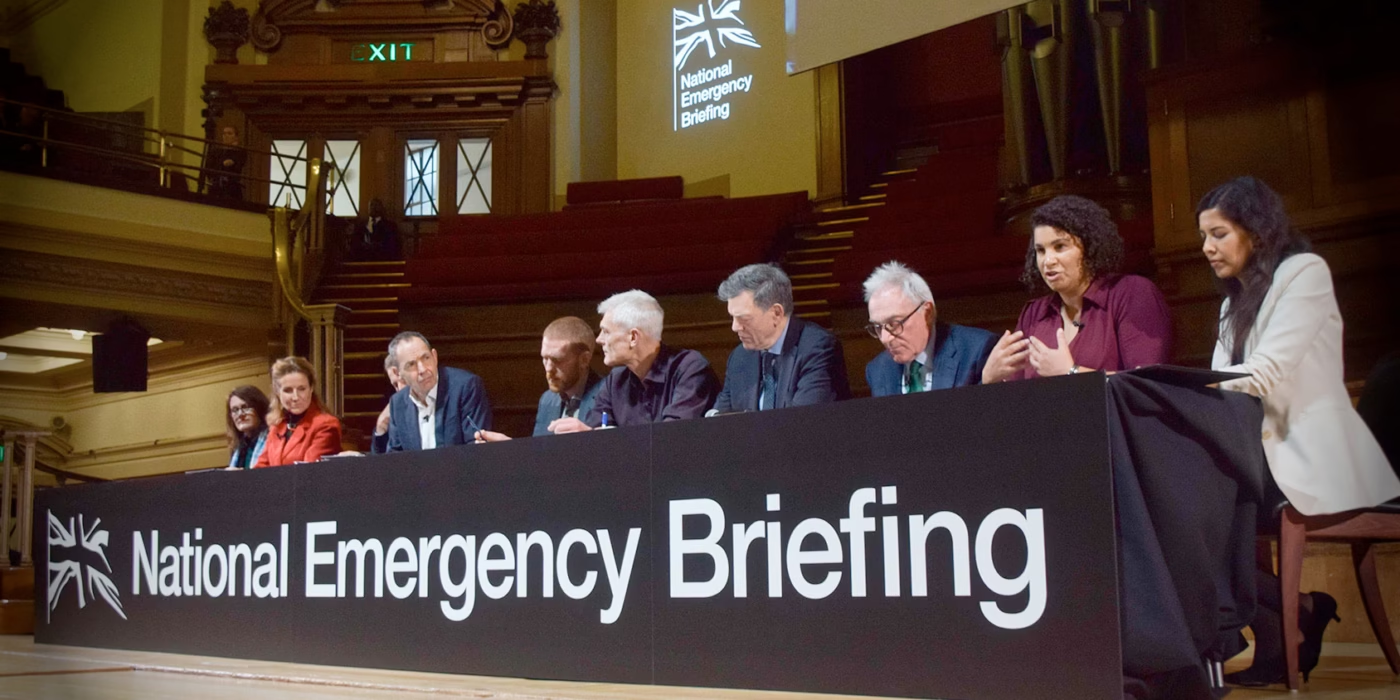
It’s Time for Climate Restoration — What the “National Emergency Briefing” Shows Us
On November 27, 2025, the UK’s National Emergency Briefing convened — bringing together ten leading experts to deliver an unfiltered assessment of the climate and nature crisis before some 1,250 politicians, business leaders, faith and cultural figures, media personalities, and civil-society representatives.
This wasn’t another abstract discussion. The briefing laid out, in stark terms, how intertwined threats to ecosystems, food security, human health, economic stability, and national security have already reached critical mass.
Why “Climate Restoration” Matters — Beyond Emissions Cuts
During the event, experts stressed a clear truth: we are not just dealing with a climate emergency, but a *nature collapse* — and addressing it demands more than emissions reductions. It requires restoring ecosystems, rebuilding natural infrastructure, and prioritizing biodiversity, water, soil, and habitat as vital elements of our long-term survival.
As one of the speakers put it: nature isn’t a “nice to have”. It is critical infrastructure — the foundation for food, clean water, flood protection, stable climate regulation, and resilient health systems.
In short: climate restoration isn’t optional. It’s existential.
From Briefing to Movement — What We Must Do Now
The National Emergency Briefing wasn’t designed merely to inform — it is the launchpad for a broader public movement. The organisers have already called on their government and media to hold a *televised national emergency briefing*, to help all citizens understand the scale of the crisis and what can be done.
Here’s what needs to happen:
- Recognize ecosystems as infrastructure — rivers, wetlands, peatlands, forests and soils must be treated with the same priority as roads, energy grids or hospitals. This means investing in their restoration.
- Stop funding harm. Reward restoration. Redirect subsidies and investments away from destructive practices (industrial farming that degrades soil, draining wetlands, polluting rivers) and towards high-integrity nature-based solutions.
- Align economic and financial policy with nature revival. Financial regulators, banks, governments — all must treat nature- and climate-risk as core stability issues, and support ecological health as part of long-term security and prosperity.
- Build a culture of care. Encourage community-led restoration, support urban greening, and nurture a social movement that values nature not just as scenery, but as essential to human well-being, health, security and dignity. ([Nature-based Solutions Initiative][2])
Watch — And Share: A Powerful Summary
The key messages from the briefing have been distilled into a concise video summary. Watch it, reflect — and then share. Let’s ensure the urgency, the clarity, and the solutions reach beyond Westminster.
(Credit to Dave Borlace from Just Have a Think for making the crucial findings accessible.)
A Call for Global Climate Restoration
Although the National Emergency Briefing focused on the UK, the lessons are universal. For us at CRA — and for activists, policymakers, and citizens around the world — this is a wake-up call: climate restoration must be front and center.
It’s time to shift the narrative: from “how do we cut emissions?” to “how do we heal the planet?” From mitigation to restoration. From short-term fixes to long-term survival and flourishing
We urge everyone — governments, financial institutions, communities, individuals — to support bold nature-positive policies and actions. Because without healthy ecosystems, there is no stable climate, no food security, no clean water, no safety.
Let this be the moment we treat Earth as the living, essential infrastructure it is — and act accordingly.